Landing Page Optimization for Car Rental PPC: Turning Clicks Into Actual Bookings
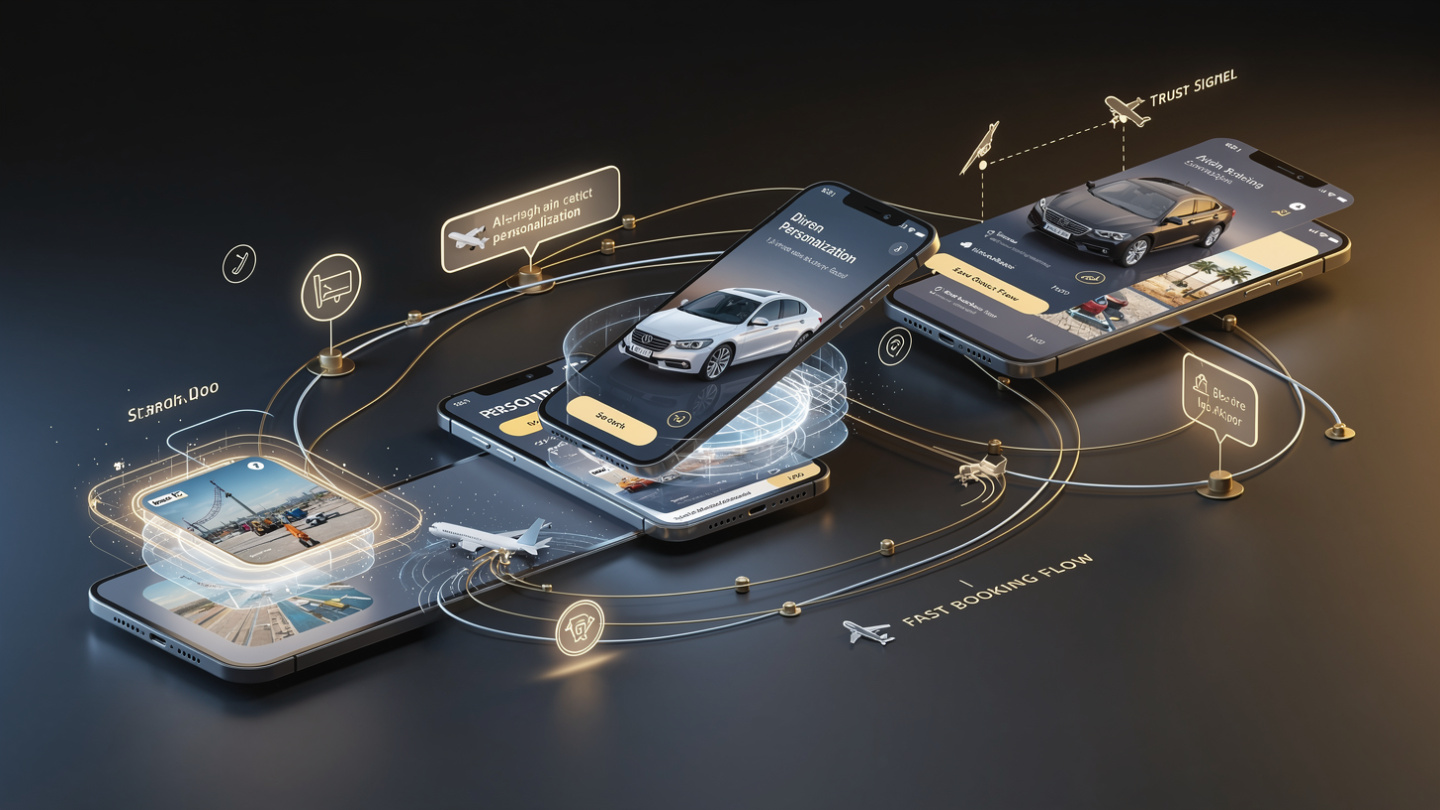
A car rental PPC campaign can be structured perfectly — right keywords, right bids, right audience segmentation — and still convert at 1.8% because the landing page undoes everything the campaign built.
This happens more than most advertisers want to admit. The campaign does its job. It finds the right user, at the right moment, with the right search intent, and delivers them to a page that makes booking feel harder than it should. The user hesitates. They open a competitor tab. They don't come back.
Car rental users arrive with a specific kind of urgency. They have a flight. They have a date. They have a destination. What they need from a landing page is confirmation that they're in the right place and a clear, fast path to completing the booking. Every element of the page that doesn't serve those two needs is working against conversion.
Landing page optimization in car rental PPC is not a design exercise. It's a friction audit. The question is not "does this page look good?" — it's "where does this page create hesitation, and how do we remove it?"
This guide covers how to build and optimize landing pages that match car rental search intent, reduce booking friction, and convert the traffic your campaigns are paying to acquire — in both the US and UK markets, which behave differently in ways that matter at the page level.
Best car Rental PPC Calls
Why Landing Pages Are Where Car Rental PPC Campaigns Actually Win or Lose
There's a number that most car rental advertisers don't look at closely enough: the gap between click-through rate and conversion rate.
A campaign with a 6% CTR and a 2% conversion rate is not a good campaign. It's an expensive traffic machine delivering users to an experience that fails them 98 times out of 100. The ad worked. The page didn't.
The reason landing pages get less attention than campaigns is partly psychological — campaigns are visible, measurable, and adjustable in real time. Landing pages feel like a development project, a separate team's responsibility, something that takes weeks to change. So they get set once and left.
In car rental PPC, this is a particularly costly habit. The category has some of the highest CPCs in travel — airport search terms in the US regularly run $5–$8 per click, and premium terms in the UK aren't far behind. At those prices, a landing page that converts at 2% instead of 4% isn't a minor underperformance. It's doubling your effective cost per booking.
A landing page that converts well also improves campaign economics beyond the direct conversion. Google's Quality Score incorporates landing page experience as a factor — better pages mean lower CPCs, which means the same budget goes further. The relationship between campaign and landing page is bidirectional. Strong pages make campaigns cheaper. Weak pages make them expensive.
Best car Rental PPC Calls
Search Intent and Landing Pages — The Match That Most Pages Miss
The biggest single cause of poor landing page performance in car rental PPC is not slow load times or weak CTAs. It's intent mismatch — a page that doesn't immediately reflect what the user was looking for when they clicked.
Message match is the principle that the headline and primary content of a landing page should mirror the specific promise made in the ad that delivered the user there. It sounds obvious. It's routinely ignored.
Here's what intent mismatch looks like in practice:
Ad Headline | Landing Page Headline | Result |
|---|---|---|
"LAX Airport Car Rental — Book in 60 Seconds" | "Welcome to [Brand] — Explore Our Fleet" | Immediate disconnect — user expected speed, got a brand intro |
"Cheap Car Hire Heathrow from £19/day" | "Premium Vehicles for Every Journey" | Price-sensitive user lands on premium positioning — exits |
"Luxury SUV Rental New York — Same Day Available" | Generic search results page | No confirmation of the specific promise — trust gap |
"Same-Day Van Hire Manchester" | Homepage with full navigation | User has to start over to find what the ad promised — friction |
Each of these mismatches costs conversion rate. The user who clicked on "LAX Airport Car Rental — Book in 60 Seconds" arrived with a specific expectation. When the page doesn't immediately confirm that expectation, the cognitive load increases, hesitation follows, and the competitor tab opens.
What strong message match looks like:
Ad: "Heathrow Car Hire from £22/day — Free Cancellation"
Page H1: "Car Hire at Heathrow Airport — From £22/Day"
Page sub-headline: "Free cancellation on all bookings. Instant confirmation."
First CTA: "Search Available Cars at Heathrow →"
The user reads the page and thinks: yes, this is what I clicked for. That confirmation is the foundation of conversion.
Car rental PPC campaign Structure
What a High-Converting Car Rental Landing Page Actually Looks Like
The Booking Widget — Position, Speed, Simplicity
In car rental, the booking widget is the conversion mechanism. Everything else on the page exists to support it or get out of its way.
The widget should be above the fold on every device. Not halfway down the page after a hero image and a brand statement — above the fold, visible immediately on arrival, ready to accept input. For airport-targeted campaigns, the pickup location field should be pre-populated with the relevant airport. Asking a user who clicked "LAX car rental" to then type "LAX" into a search field is a friction point that costs conversions at scale.
Fields should be minimal. Pickup location, pickup date and time, return date and time — that's the booking initiation. Everything else (driver age, additional drivers, insurance preferences) belongs in the next step, not the first one. Every additional field on the initial form reduces completion rate.
Load time of the widget matters independently of page load time. A page that loads in 2.1 seconds but whose booking widget takes an additional 1.8 seconds to become interactive has a 3.9-second effective wait time — well above the thresholds that trigger abandonment.
Clear Primary Action — One CTA, One Direction
Most high-performing car rental landing pages have one primary CTA. Not one primary and two secondary. One.
The instinct to add secondary CTAs — "Browse our fleet", "Learn about our insurance", "Contact us" — comes from a desire to capture users who aren't ready to book. It's understandable and almost always counterproductive. Users who are ready to book get distracted. Users who aren't ready to book don't convert through secondary CTAs either — they leave.
The CTA copy matters more than most advertisers give it credit for. "Search Cars" is weak. "Book Now" is generic. "Check Availability at Heathrow →" is specific, action-oriented, and confirms location relevance in three words.
Trust Signals — Specific, Not Generic
Trust signals in car rental have one job: reducing the hesitation that occurs when a user is about to commit money to an unfamiliar booking. Generic trust signals — padlock icons, vague "secure booking" badges — do almost nothing. Specific ones move the needle.
The trust signals that actually affect car rental conversion rates:
Real reviews with scores. Not "customers love us" — a visible aggregate score (4.7/5 from 2,840 reviews) with a link to the source. Users recognize Trustpilot, Google Reviews, and TripAdvisor as credible. A proprietary badge they've never seen before doesn't register as trust.
Cancellation policy — stated explicitly and early. "Free cancellation up to 24 hours before pickup" is a conversion driver, not a footnote. Users in the car rental category have been burned by inflexible policies. Surfacing this information prominently reduces hesitation significantly.
No hidden fees — and say so directly. This is the single biggest anxiety in car rental. Users have been surprised by fuel policies, insurance add-ons, young driver surcharges, and airport fees that weren't in the advertised price. A page that says "Price shown includes all mandatory fees — no surprises at the counter" addresses this anxiety directly and converts better than one that doesn't.
Named fleet partners. If the booking connects to major fleet partners or known rental brands, naming them builds immediate confidence. "Vehicles from Hertz, Avis, Enterprise and 500+ suppliers" is more reassuring than "wide selection of vehicles."
Page Speed — The Conversion Factor Most Pages Get Wrong
Speed is not a technical concern. It's a conversion concern.
Google's research consistently shows conversion rate drops with every additional second of load time. In mobile car rental searches — where a significant share of bookings originate — the relationship is steeper. Users searching "same day car rental" from a mobile device are not going to wait four seconds for a page to load. They're going to click the next result.
The targets that matter for car rental landing pages:
Core Web Vital | Target | What It Affects |
|---|---|---|
Largest Contentful Paint (LCP) | Under 2.5 seconds | When the main content becomes visible — first impression speed |
First Input Delay (FID) / INP | Under 100ms | How quickly the booking widget responds to the first tap |
Cumulative Layout Shift (CLS) | Under 0.1 | Whether the page jumps around as it loads — causes mis-taps on mobile |
Time to Interactive (TTI) | Under 3.5 seconds | When the full page is usable, not just visible |
The most common speed killers on car rental landing pages: unoptimized hero images (a 4MB background image of a beach road is not worth the conversion rate it costs), third-party scripts loading synchronously (live chat widgets, retargeting pixels, and analytics tags that block render), and booking widgets that call external APIs on page load rather than on user interaction.
For mobile specifically: pages that pass Core Web Vitals on desktop and fail on mobile are common. Test on mobile. Most car rental searches happen there.
Mobile-First Design — Not Mobile-Friendly, Mobile-First
There's a meaningful difference between a mobile-friendly page and a mobile-first one. Mobile-friendly means the desktop page has been adjusted to not break on smaller screens. Mobile-first means the mobile experience was designed as the primary experience and the desktop version was built from there.
In car rental PPC, mobile-first is not optional. Airport searches — the highest-converting intent in the category — happen on phones. A user in the departure lounge searching "car hire at destination airport" is holding a phone, probably has one hand occupied, and will not tolerate a booking flow that requires precise tapping on small form fields.
The mobile landing page checklist for car rental:
Booking widget tap targets minimum 44x44px — thumb-friendly, not cursor-friendly
Date picker designed for mobile input — not a desktop calendar control that renders poorly on touch screens
Phone number click-to-call visible above the fold — a significant share of high-value car rental bookings happen by phone, not online form
No interstitials or pop-ups on mobile — Google penalizes these and users abandon immediately
Font size minimum 16px for body text — users shouldn't need to zoom to read pricing information
Sticky CTA bar on scroll — as the user scrolls past the booking widget, a persistent "Book Now" bar keeps the conversion action accessible
Matching Landing Pages to Campaign Structure
One of the structural arguments for segmented campaigns is that it enables segmented landing pages. When all traffic goes to one campaign, it all goes to one page. When campaigns are segmented by intent, each segment can have a landing page built for its specific user.
The direct correspondence that produces the best conversion rates:
Campaign Type | Landing Page Focus | Key Page Element |
|---|---|---|
Airport (specific) | Airport name, fast booking, pre-filled location | Pre-populated pickup field, LCP under 2s |
Vehicle-specific (SUV, luxury) | Vehicle imagery, premium positioning, feature detail | Vehicle showcase above fold, quality trust signals |
Same-day / last-minute | Urgency, immediate availability, speed | "Available today" dynamic content, one-step booking |
Budget / price-focused | Price transparency, comparison, no-hidden-fees | Price table or widget with inclusive pricing |
Competitor (conquesting) | Differentiation, switching incentive, trust signals | Direct comparison element or "why choose us" above fold |
Retargeting | Personalized return, incentive to complete, familiarity | Dynamic content referencing previous search, loyalty offer |
The retargeting landing page deserves specific attention. A user returning from a retargeting ad has already visited the site. Sending them back to the same generic page they left creates no new reason to convert. A page that acknowledges their previous search — "Still looking for an SUV at Heathrow? Here's what's available" — creates relevance that a generic homepage cannot.
Car Rental PPC Marketing: Turning Clicks and Calls into Confirmed Bookings
The Role of AI in Landing Page Optimization
AI-driven optimization tools are increasingly part of how landing pages are tested and personalized. Used correctly, they compress the time between hypothesis and conclusion in A/B testing, identify user behavior patterns that manual review misses, and enable content personalization at a scale that's not achievable manually.
Used incorrectly — or applied to pages that have fundamental structural problems — they produce optimized versions of bad pages.
Dynamic content personalization is the most immediately applicable AI capability for car rental landing pages. Showing airport-specific headlines to airport campaign traffic, adjusting vehicle imagery based on the user's previous browsing behaviour, surfacing the relevant price for the user's departure location — these personalization’s improve relevance without requiring separate manually-built page variants for every segment.
AI-driven A/B testing (multivariate testing platforms like Google Optimizer's successors, VWO, or Optimizely) can test multiple variables simultaneously and reach statistical significance faster than sequential manual testing. For car rental, the highest-leverage test variables are: CTA copy, booking widget position, trust signal placement, and pricing display format (from vs. total inclusive).
Heatmap and session recording analysis — tools like Hotjar or Microsoft Clarity — show exactly where users drop off in the booking flow, which trust signals they engage with, and where mobile users struggle with tap targets. This behavioral data should inform every landing page iteration.
The principle that applies from the campaign structure post applies here too: AI amplifies what's already working. A page with clear intent alignment, fast load times, and a functional booking widget becomes significantly more efficient with AI personalization layered on top. A page with a confusing layout and a slow widget becomes a faster, personalized version of a confusing, slow page.
Ad Creative Strategy for car Rentals
US vs UK Landing Page Behavior — What Changes at the Page Level
The differences between US and UK car rental users don't stop at keyword terminology. They extend to page behavior, conversion triggers, and what creates hesitation.
Dimension | US Market | UK Market |
|---|---|---|
Decision speed | Faster — airport urgency dominates | More deliberate — comparison-driven behavior common |
Price display preference | Total price with taxes | Per-day rate with clear breakdown |
Hidden fee sensitivity | High — fuel policy surprises common | Very high — airport surcharges and insurance add-ons major friction point |
Trust signal preference | Brand recognition, ratings volume | Trustpilot score, ATOL/ABTA protection where relevant |
Mobile booking rate | High — 60%+ of airport searches | High but slightly lower — more desktop comparison before mobile booking |
Cancellation policy prominence | Important | Critical — UK users more likely to abandon without visible free cancellation |
Page copy terminology | "car rental", "reservation", "trunk" | "car hire", "booking", "boot" |
Phone number prominence | Moderate — online booking preferred | Higher — UK users more likely to call for high-value or complex bookings |
The practical implication: if you're running campaigns in both markets, the landing pages should be built separately — not translated from one to the other. The terminology differences are the visible layer. The behavioral differences underneath them are what actually affect conversion rate.
A UK user landing on a US-built car rental page that shows prices without VAT, uses "trunk" in the vehicle description, and doesn't display Trustpilot prominently is experiencing a page that wasn't built for them. The friction is subtle but cumulative.
Landing Page Conversion Friction Audit
Before redesigning a car rental landing page, audit it against this framework. Each element scores 0 (not present or poor), 1 (present but weak), or 2 (present and optimized).
Element | 0 | 1 | 2 |
|---|---|---|---|
Booking widget above the fold | Not visible | Partially visible | Fully visible, prominent |
Message match with ad | No alignment | Partial alignment | Direct match |
LCP under 2.5 seconds | Over 4s | 2.5–4s | Under 2.5s |
Mobile tap targets ≥44px | Multiple failures | Some issues | All targets compliant |
Cancellation policy visible | Not present | In footer/small print | Prominent, above fold |
Pricing — no hidden fees stated | Not addressed | Implied | Explicitly stated |
Trust signals (reviews, ratings) | Not present | Generic badges only | Specific scores, named source |
Single primary CTA | Multiple competing CTAs | One primary + one secondary | One CTA only |
Pre-populated location (airport campaigns) | Not pre-filled | Pre-filled sometimes | Always pre-filled |
Click-to-call visible (mobile) | Not present | Below fold | Above fold, prominent |
Score interpretation:
16–20: Strong landing page, focus on AI-driven optimization and incremental testing
10–15: Significant improvements available — prioritize message match, speed, and trust signals
Below 10: Structural rebuild needed before optimization — current page is likely costing more than campaigns are worth
Case Study: Landing Page Optimization for a UK Car Hire Operator
The Situation
A mid-size UK car hire operator was running well-structured Google Ads campaigns — segmented by airport, vehicle type, and city — but converting at 2.1% despite strong CTRs. All campaign traffic, regardless of source, landed on the same homepage. The page loaded in 4.3 seconds on mobile. Pricing shown was per-day excluding VAT and airport fees. Cancellation policy was in the footer.
Before optimization:
Metric | Value |
|---|---|
Landing page load time (mobile) | 4.3 seconds |
Conversion rate | 2.1% |
Bounce rate | 67% |
Cost per booking | £94 |
Booking completion rate | 31% |
What Was Built
Four intent-specific landing pages were built to match the campaign structure:
Airport pages (one per major UK airport) — pre-populated pickup location, LCP reduced to 1.9 seconds via image optimisation and script deferral, free cancellation and inclusive pricing prominently stated above fold, Trustpilot score (4.6/5) displayed next to the booking widget
Vehicle-specific page (SUV and premium) — vehicle imagery above fold, feature highlights, "no hidden airport fees" stated explicitly, click-to-call prominent for high-value bookings
Budget/price-focused page — daily rate with inclusive pricing table, direct "no surprises at the counter" statement, simplified one-step search
Retargeting landing page — dynamic headline reflecting user's previous airport search, return incentive ("Complete your booking — prices may have changed"), familiar layout to reduce reorientation friction
AI-driven multivariate testing was run across CTA copy, trust signal placement, and pricing display format over a 45-day period.
Results After 60 Days
Metric | Before | After | Change |
|---|---|---|---|
Landing page load time (mobile) | 4.3s | 1.9s | −56% |
Conversion rate | 2.1% | 4.7% | +124% |
Bounce rate | 67% | 38% | −43% |
Cost per booking | £94 | £47 | −50% |
Booking completion rate | 31% | 58% | +87% |
The conversion rate improvement came from three compounding changes: message match (users landing on pages that reflected their specific search), speed improvement (mobile bounce rate dropped sharply when load time fell below 2 seconds), and trust signal specificity (Trustpilot score and explicit no-hidden-fees statement reduced checkout abandonment by 34%).
Common Landing Page Mistakes in Car Rental PPC
Sending all traffic to the homepage. The homepage is designed for everyone — which means it's optimized for no one. A user who clicked an airport-specific ad arrives at a page that has no immediate confirmation they're in the right place. The booking widget is somewhere down the page. Navigation options pull attention in multiple directions. Conversion rate suffers.
Multiple competing CTAs. "Book now", "Browse fleet", "Get a quote", "Contact us", "Learn more" — every additional CTA reduces the probability that the user takes the one that matters. Decision fatigue is real. One page, one primary action.
Hiding the price until late in the booking flow. Car rental users are comparison shopping. If your page doesn't show pricing clearly, they'll find a competitor that does. The fear of showing price upfront is understandable — what if it's higher than competitors? — but the alternative is worse. Users who abandon because of a price surprise at step three of the booking flow are more expensive than users who don't click because the price is visible on the page.
Weak mobile experience. Not just slow — specifically, form fields and date pickers that weren't designed for touch input, tap targets too small for thumbs, and layouts that require horizontal scrolling. These are not edge cases. They're the experience for the majority of airport search traffic.
No page-level trust signals for high-value rentals. A £15/day economy hire booking gets completed with minimal hesitation. A £180/day luxury SUV booking for two weeks does not. High-value rental pages need proportionally stronger trust signals — named fleet partners, insurance clarity, cancellation terms, and review volume that substantiates the price point.
"The landing page is where the user decides whether the campaign's promise was real. Get the targeting right, get the ad right, and then send the user somewhere that makes them start over from scratch — you've wasted the whole chain. The page has to finish what the campaign started." — Jeffrey Mathew
Frequently Asked Questions
Why do landing pages matter in car rental PPC if the ad already captured the right intent? The ad captures intent. The landing page converts it. A user who clicked with genuine booking intent can still abandon if the page creates friction — slow load, mismatched message, unclear pricing, or a booking flow that requires too many steps. In car rental, where users are often time-pressured and comparison-shopping simultaneously, friction costs conversion rate faster than in almost any other category.
Should car rental PPC traffic go to the homepage? Almost never. The homepage serves all visitors — fleet browsers, existing customers, job seekers, people looking for contact information. A PPC user who clicked a specific ad has a specific intent. A landing page built for that intent will outperform a homepage in almost every case. The only exception is a brand campaign where the user searched for the brand by name and already has high intent to engage with the brand experience broadly.
How important is mobile optimization for car rental landing pages? Critical. A substantial share of car rental searches — particularly airport searches — happen on mobile devices, often during travel. Pages that load slowly, have small tap targets, or use desktop-style date pickers create friction that directly costs bookings. Mobile optimization is not a nice-to-have; it is the primary experience for a large portion of the converting audience.
Does page speed actually affect car rental conversion rates? Yes, measurably. The case study above shows a 56% improvement in load time correlating with a 124% improvement in conversion rate — though the speed improvement was one of several simultaneous changes. Google's own data shows that pages loading in 1–3 seconds have significantly lower bounce rates than those loading in 3–5 seconds, and the relationship steepens on mobile. For car rental specifically, where users are often in an urgent booking mindset, waiting for a slow page to load has a lower tolerance threshold than in lower-urgency categories.
Can AI improve landing page performance without redesigning the page? Yes, within limits. AI-driven personalization can improve relevance — showing airport-specific content to airport traffic, adjusting messaging based on device type or time of day — without requiring a full redesign. AI-driven testing can identify which elements to change and prioritize the highest-impact variations. But AI optimization applied to a page with fundamental structural problems — poor message match, slow load time, hidden pricing — will produce marginal gains at best. The structural issues need to be resolved first.
Key Takeaways
Landing page optimization in car rental PPC is not separate from campaign strategy — it's the final layer that determines whether the campaign's investment produces bookings or just traffic.
Message match is the foundation. Every landing page should immediately confirm the promise the ad made. Airport campaigns need airport-specific pages. Budget campaigns need price-forward pages. Luxury campaigns need premium experiences. The gap between what the ad promised and what the page delivers is where conversion rate is lost.
Speed is a conversion variable, not a technical variable. Mobile load time under 2.5 seconds is the target. Every second above that costs booking completions, particularly in the airport search segment where urgency is highest and patience is lowest.
Trust signals need to be specific and prominent. Generic security badges don't move conversion rates. Explicit no-hidden-fees statements, named review sources with visible scores, and clear cancellation terms do — particularly in the UK market where fee sensitivity is acute.
AI amplifies pages that already work. Personalization and multivariate testing compound the gains from strong structural foundations. They don't substitute for them.
US and UK users behave differently at the page level. Build separate landing pages for each market rather than translating one to the other.
Campaign structure for car rental PPC
High-intent keywords for car rental PPC
How Teckgeekz Optimizes Car Rental PPC Landing Pages
The landing pages we build for car rental clients start with the same question the campaign structure starts with: what does this specific user expect to see when they arrive?
That question drives every decision — which elements go above the fold, how the booking widget is configured, what trust signals are prominent, how pricing is displayed. The page is not built to look good. It's built to confirm the ad's promise and remove every obstacle between arrival and booking.
Car rental PPC Management
Speed optimization is treated as a conversion task, not a technical one. We set load time targets before the page is designed, not after — because adding performance optimization after a page is built is always harder and less effective than building for performance from the start.
AI personalization is introduced once the structural foundation is solid. Dynamic content adjusted by campaign source, device type, and user behavior improves pages that already convert. On pages that don't, it reveals the same friction points faster and at lower cost than extended manual testing.
The outcome for clients is a landing experience that works with the campaign rather than against it — where every pound or dollar spent on clicks has a page built to convert it.


Jeffrey Mathew
Founder & CEO • Travel Marketing Specialist
"With over 14 years of dominance in the travel and tech sectors, Jeffrey Mathew has engineered growth for hundreds of OTAs and airlines worldwide. He specializes in the intersection of Performance PPC and Agentic AI, building high-performance digital ecosystems for modern brands."
Start a Conversation
Ready to Elevate Your Business?
Fill out the form below and let's discuss how Teckgeekz can help you reach your goals.
Describe your project to unlock real-time AI service recommendations and matching portfolio cases.
Our Trusted Partners