Retargeting Strategy for Car Rental Ads: Recovering Lost Bookings and Improving PPC Efficiency
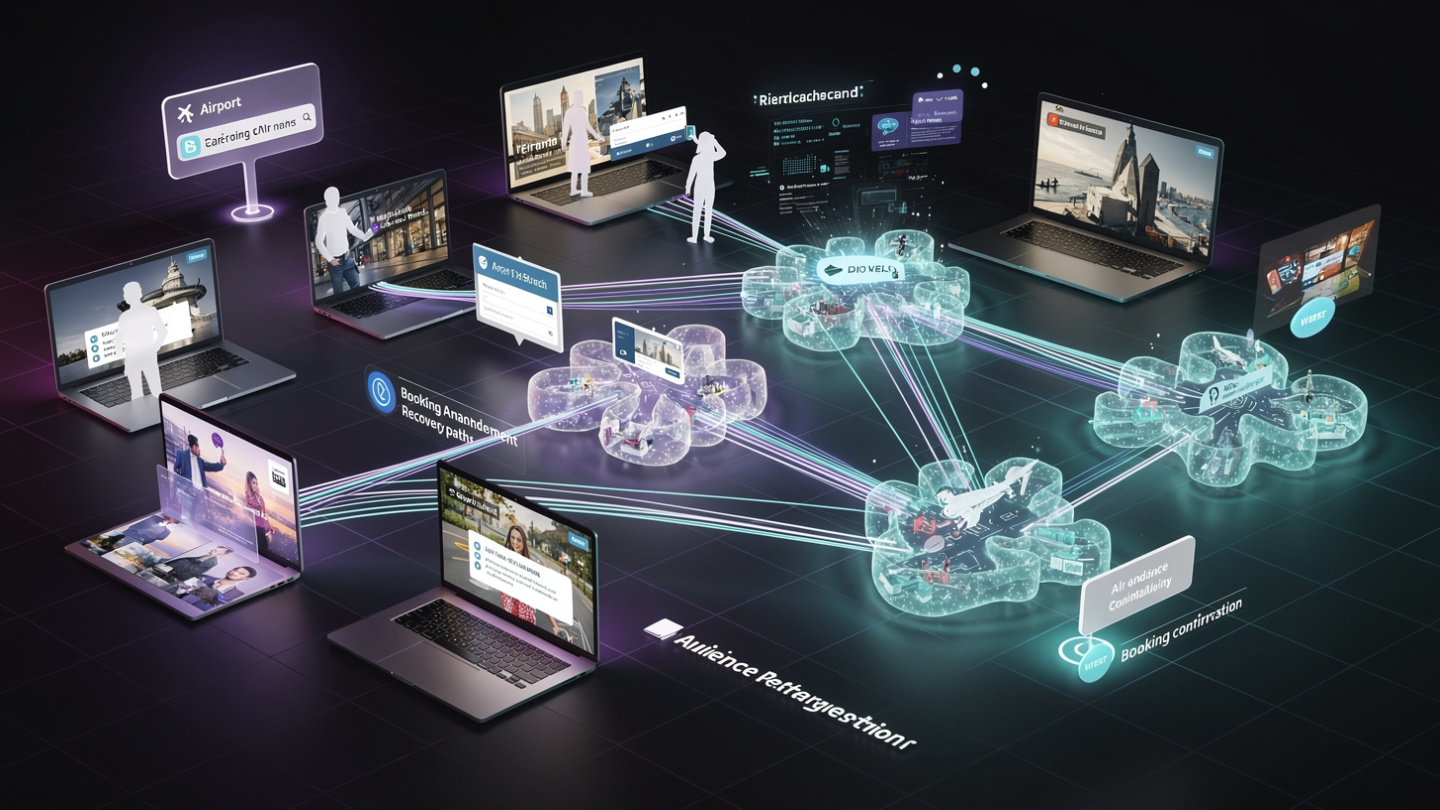
Most users who click a car rental ad do not book on that visit. That's not a failure of the campaign — it's the nature of the category. Car Rental PPC Campaigns needs proper time and attention to improve and constant optimizations.
Car rental decisions involve comparison. Users check pricing across multiple providers, verify vehicle availability against flight times, read reviews, consider insurance options, and often return to complete the booking from a different device at a different time. The gap between first click and completed booking can be hours, days, or — for advance travel planners — weeks.
Without retargeting, every user who leaves without booking becomes invisible. The campaign paid to acquire them. They showed intent. And then they disappeared into a competitor's funnel or simply got distracted and forgot to return.
Retargeting closes that gap. Not by showing the same ad repeatedly until the user gives in — that's not retargeting, that's harassment — but by reconnecting with the right users, with the right message, at the right point in their decision process. Done well, it recovers demand that acquisition campaigns have already paid for, at a fraction of the cost of acquiring new users.
In car rental PPC specifically, where CPCs on airport terms run $5–$8 in the US and £3–£6 in the UK, the economics of retargeting are particularly compelling. The alternative — treating every non-converting click as lost and paying to re-acquire similar users from scratch — is the most expensive approach available.
This guide covers how to build a retargeting system for car rental PPC that segments audiences by intent, matches messaging to booking stage, manages frequency intelligently, and uses AI to improve personalization without losing strategic control. It covers both US and UK market behavior, which differ at the retargeting layer in ways that matter for campaign setup.
Why Retargeting Matters More in Car Rental Than Most Categories
The average car rental booking involves five to seven touchpoints before conversion. That figure varies by trip type — a last-minute same-day rental compresses the journey, a two-week international hire extends it — but the underlying pattern is consistent: users rarely commit on first contact.
This multi-touchpoint behavior is what makes car rental retargeting not just useful but structurally necessary. A campaign without retargeting is a campaign that pays full acquisition cost for users who showed intent, then abandons them at the exact moment they're most likely to convert — when they return, ready to decide.
The categories of non-converting users who are worth re-engaging, and roughly what they represent in a typical car rental account:
Booking abandoners — users who started the booking process (entered dates, selected a vehicle, reached checkout) but didn't complete. These are the highest-intent audience in any car rental account. They made a decision to engage with the booking flow. Something stopped them — price hesitation, a distraction, an unexpected fee, or simply running out of time. Retargeting them, quickly and with the right message, recovers a significant share.
Vehicle page viewers — users who browsed specific vehicle categories (SUV, luxury, van) without initiating a booking. They have preference signals. They know what they want. They haven't committed yet.
Airport search visitors — users who arrived via airport-specific campaigns and viewed airport landing pages without booking. High intent, specific location signal, probably comparing across providers simultaneously.
Return visit users — users who have visited the site more than once without booking. Multiple visits without conversion usually signal comparison behaviour — they're narrowing down options and haven't yet decided. A well-timed retargeting message during this phase can tip the decision.
Past customers — users who have booked previously and are showing new search behavior. Customer list retargeting for repeat bookings is one of the highest-converting and most underused audiences in car rental PPC.
Car Rental PPC
Understanding the Car Rental Booking Journey
Before segmenting audiences or setting up campaigns, it's worth being precise about what the car rental decision journey actually looks like — because retargeting strategy that doesn't match the journey produces the wrong messages at the wrong times.
Stage 1: Initial Discovery
The user is establishing what's available. They may be searching by destination, comparing general pricing, or checking which providers service a specific airport. Conversion intent at this stage is low. The user is gathering information, not making a decision.
Retargeting users at this stage with aggressive booking-urgency messaging is the most common retargeting mistake in the category. "Book before prices rise" shown to someone who just discovered your brand for the first time creates pressure without the trust foundation that makes pressure effective. It tends to produce ad fatigue rather than conversions.
The right message at this stage: brand familiarity and value reassurance. Keep the retargeting impression present but low-frequency. The goal is to remain in consideration, not to force a decision.
Stage 2: Comparison Phase
The user is actively evaluating options. They're checking pricing across providers, reading reviews, verifying vehicle availability for specific dates, and assessing the fine print — fuel policies, insurance options, airport surcharges, cancellation terms.
This is where most users spend the majority of their pre-booking time, and where the decision is actually made. Retargeting at this stage should address the specific friction points that create hesitation in comparison behaviour: transparent pricing, clear cancellation policy, trust signals that distinguish the brand from competitors showing similar prices.
Users in the comparison phase respond to specificity. "Still considering? Our Heathrow rate includes all fees — no surprises at the counter" is a retargeting message built for this stage. "Book your car rental today" is not.
Stage 3: Booking Intent
The user has decided on a destination and dates and is actively moving toward completing a booking. Search behaviour becomes more transactional — specific vehicle types, exact airport locations, date-specific availability. This is the stage where booking abandoners live.
Retargeting at this stage should be direct, fast, and frictionless. Urgency works here because the user is already motivated — they just need a reason to complete now rather than later. Availability signals, time-limited pricing, and a direct return path to the booking flow are the right tools.
The window for effective retargeting at this stage is short. A booking intent user who doesn't convert within 48–72 hours has usually either booked with a competitor or deferred the decision entirely. Fast follow-up is essential.
Types of Retargeting Campaigns for Car Rental PPC
Booking Abandonment Campaigns
The highest-priority retargeting audience in any car rental account. These users reached the booking flow — they entered dates, selected a vehicle, possibly reached checkout — and stopped. The intent signal is unambiguous.
What typically causes booking abandonment in car rental:
Unexpected fees appearing late in the checkout process (insurance add-ons, airport surcharges, young driver fees)
Pricing that seemed reasonable in the search result but felt less competitive at checkout
A booking flow that required too many steps or felt untrustworthy
Simple distraction — a phone call, a notification, running out of time
The retargeting message for abandoners should address these friction points directly. "Return to your booking — price is held for 24 hours" removes the pricing anxiety. "All fees included — no surprises" addresses the hidden fee fear. A direct link back to the specific stage in the booking flow where they dropped off reduces the friction of starting over.
Audience window: 3–7 days. Booking abandoners who don't convert within a week have typically either booked elsewhere or significantly deferred the trip.
Vehicle-Specific Retargeting
Users who viewed specific vehicle categories carry preference signals that should shape ad personalization. Someone who spent four minutes on the SUV page and compared three SUV options is not a generic car rental prospect — they are an SUV prospect. Showing them a generic car rental ad on retargeting wastes that signal.
Vehicle-specific retargeting works best with dynamic ad formats that pull the viewed vehicle type into the ad creative — "Still interested in SUV hire at Heathrow?" with a vehicle image and a direct booking link. This level of specificity improves CTR and, more importantly, conversion rate — because the ad feels like a continuation of the user's journey, not a reset of it.
Airport Intent Retargeting
Airport campaign visitors are among the most valuable retargeting audiences because the location signal is explicit. A user who clicked a "Heathrow car hire" ad and visited the Heathrow landing page has told you exactly where they're going. Retargeting them with Heathrow-specific messaging — specific availability, specific pricing, Heathrow-focused trust signals — is significantly more effective than generic car hire retargeting.
In the US market, where airport campaigns drive the majority of high-value bookings, airport intent retargeting audiences should be built separately for each major hub. LAX, JFK, ORD, and MIA users all have different competitive landscapes and should not be pooled into a single undifferentiated airport audience.
Booking Abandonment at Checkout vs. Earlier Stages
Not all abandoners are equal. A user who abandoned at the vehicle selection stage is at a different point in the decision than one who abandoned at the payment page. If your booking flow allows for funnel-stage audience building in GA4 — and it should — segment these separately.
Payment page abandoners are the highest-intent audience on the site. They had a vehicle, dates, and an intention to pay. Something at the final step stopped them. The retargeting message should be specific: remove the objection that likely caused the abandonment (price transparency, security concerns, payment method limitations) and provide a direct return path to the payment step.
Dynamic Retargeting
Dynamic retargeting uses the user's on-site behaviour to populate ad creative automatically — showing the specific vehicle they viewed, the airport they searched, or the dates they entered. For car rental, this requires a product feed structured around vehicle types and locations rather than individual SKUs.
The conversion lift from dynamic retargeting in car rental is consistently meaningful. A user who sees their exact previously-searched vehicle in a retargeting ad experiences far less cognitive friction than one who sees a generic car rental message — they don't have to rebuild their mental context from scratch.
Car Rental PPC Marketing: Turning Clicks and Calls into Confirmed Bookings
Audience Segmentation Framework
Pooling all non-converting visitors into one retargeting audience is the most common structural mistake in car rental retargeting. Different users need different messages, different windows, and different frequency strategies.
Audience Segment | Intent Level | Retargeting Window | Recommended Frequency | Priority |
|---|---|---|---|---|
Payment page abandoners | Very High | 1–5 days | 5–8 impressions/day | Critical |
Booking flow abandoners (pre-payment) | High | 3–7 days | 4–6 impressions/day | High |
Airport-specific page visitors | High | 7–14 days | 3–5 impressions/day | High |
Vehicle-specific page viewers | Medium-High | 14–21 days | 2–4 impressions/day | Medium |
General site visitors (2+ pages) | Medium | 21–30 days | 1–3 impressions/day | Medium |
Single-page visitors (<30 seconds) | Low | 7–14 days or exclude | 1–2 impressions/day | Low |
Past customers (new search behavior) | High | 30–60 days | 2–4 impressions/day | High |
The single-page visitor segment deserves specific attention. Users who landed on the site, spent less than 30 seconds, and left have shown minimal intent. Including them in retargeting audiences inflates audience size, dilutes conversion signals, and wastes budget. Excluding or deprioritising them — a small configuration decision — meaningfully improves retargeting efficiency.
Retargeting strategy for Travel PPC
Exclusion Lists — The Retargeting Layer Most Accounts Skip
Exclusions are as important as inclusions in car rental retargeting. Targeting the right users while simultaneously targeting the wrong ones negates the efficiency gains segmentation is supposed to deliver.
Who to exclude from all retargeting campaigns:
Recent converters. A user who completed a booking does not want to see car rental ads for the duration of their rental. This sounds obvious and is routinely forgotten. Set a post-conversion exclusion window of at least 30 days — longer for users who booked a multi-week rental.
Users currently within their booking window. Someone who booked last Tuesday for a pickup next Friday is in a confirmed booking state. Retargeting them creates confusion, potential cancellation risk, and wasted spend.
Users who explicitly disengaged. If your booking flow has a "not interested" or cancellation path, those users should be excluded from aggressive retargeting windows. They've signalled their current intent clearly.
Internal traffic. Staff browsing the site to check availability or test booking flows should not populate retargeting audiences. IP exclusions for office and remote working locations are a basic hygiene step that many accounts skip.
Competitor research visitors. Users who arrive via competitor-name search terms and bounce immediately are not prospective customers in this session — they were likely looking for the competitor, landed on your site by mistake or by ad click, and left. Including them in retargeting audiences pollutes the intent signals the campaign relies on.
Timing and Frequency — Getting Both Right
Retargeting that ignores timing and frequency doesn't recover bookings — it creates negative brand associations.
The frequency question in car rental retargeting is not "how many impressions does it take to convert a user?" It's "how many impressions does it take before the user's reaction shifts from 'useful reminder' to 'why is this brand following me?'" Those are very different questions and they produce very different answers.
For high-intent segments — payment page abandoners and booking flow abandoners — higher frequency in a short window is appropriate. These users were close to booking. The impression they need is a reminder, not an introduction, and the window in which that reminder is useful is narrow.
For lower-intent segments — general site visitors, single vehicle-page viewers — lower frequency over a longer window reflects the longer decision cycle these users are on. Hitting them five times a day produces fatigue without conversion. Staying present at low frequency keeps the brand in consideration without generating the irritation that makes users actively block or ignore the ads.
Day-parting for car rental retargeting: airport booking intent concentrates in specific windows — evening hours when users are planning the next day's travel, and early morning when users are at or near departure. Scheduling retargeting impressions to increase during these windows, particularly for booking abandoner audiences, improves the probability of catching users at a moment of active consideration.
Ad Creative Strategy for Retargeting
Retargeting ads that look identical to acquisition ads miss the fundamental strategic difference between the two. Acquisition ads introduce. Retargeting ads continue.
A user who has already visited the site, viewed specific vehicles, and possibly started a booking doesn't need to be told what the brand is or what services it offers. They know. What they need is a message that addresses their specific hesitation or reminds them of a specific reason to return.
For booking abandoners: Address the likely objection directly. "All fees included — no airport surcharges" handles the hidden fee fear. "Your selected vehicle is still available — complete your booking" handles the scarcity signal. "Free cancellation until 24 hours before pickup" handles the commitment anxiety. The message should feel like the brand noticed they didn't complete and is offering a specific reason to return — not a generic "book now."
For vehicle-specific viewers: Dynamic creative showing the exact vehicle category they viewed, with a direct booking link for that vehicle type. Specificity is the differentiator here. "Still considering an SUV at Heathrow?" outperforms "Car hire from £22/day" for this audience every time.
For comparison-phase users: Trust-led messaging. Review scores, named trust signals, direct comparisons on the elements that matter most to comparison shoppers — price transparency, cancellation flexibility, fleet quality. "4.7/5 from 12,000 Trustpilot reviews" combined with "Prices shown include all fees" addresses the two primary comparison-phase hesitations simultaneously.
For past customers: Loyalty and recognition framing. "Welcome back — exclusive rate for returning customers" or "Your last rental was with us — here's what's available for your next trip." Users who have booked before have cleared the trust barrier. The messaging should acknowledge that and offer something that makes returning feel rewarding rather than incidental.
Landing Page Optimization for Car Rental PPC
Ad Copy Strategy for Car Rental PPC
Budget Allocation & ROI Optimization for Car Rental PPC
Landing Page Alignment for Retargeting
The landing page a retargeted user arrives on matters as much as the ad that brought them back.
Sending retargeted users to the homepage is the most common and most damaging landing page mistake in car rental retargeting. The user who clicked a retargeting ad for Heathrow SUV hire should not land on a generic homepage and have to restart their search. They should land on a Heathrow-specific page with SUV availability visible — a direct continuation of the journey they previously started.
The experience should feel familiar without being identical. If the user abandoned at checkout, returning them to the exact checkout stage they left — with their previous selections preserved where possible — removes the biggest friction point in booking recovery. Starting from scratch is a significant psychological barrier. Not having to start from scratch is a meaningful conversion driver.
For dynamic retargeting specifically, the landing page and the ad should form a seamless unit — the vehicle shown in the ad should be the vehicle presented first on the landing page, with a direct booking path for that specific vehicle and location.
Landing Page Optimization for Car Rental PPC
Cross-Device Behavior in Car Rental Retargeting
The car rental booking journey across devices follows a pattern consistent enough to plan around: mobile for initial search and comparison, desktop for booking completion.
A user searches "Heathrow car hire" on their phone during a commute, visits two or three provider sites, doesn't book because completing a booking on mobile while in transit is inconvenient, and returns to the desktop later to finalise. This is not an edge case — it's the dominant pattern for higher-value car rental bookings in both the US and UK markets.
Retargeting systems that don't account for this cross-device journey will undercount the audience and miss retargeting opportunities. A user who visited on mobile and converted on desktop looks like two separate users to a system not configured for cross-device tracking.
Practical setup for cross-device retargeting in car rental:
GA4's cross-device reporting, when linked to Google Ads, tracks signed-in users across devices and attributes conversions to the correct touchpoints. This requires the GA4 → Google Ads audience link to be active, and it requires the booking flow to encourage — or require — account sign-in, which provides the identity signal needed for cross-device matching.
For users who don't sign in, Google's modelled conversions fill some of the gap using aggregated, anonymised signals — but modelled data is less reliable for campaign-level decisions than measured data. The more sign-in touchpoints in the booking journey, the more accurate the cross-device picture.
Day-parting implication: mobile retargeting impressions should be weighted toward commuting hours and evening browsing. Desktop retargeting should weight toward the same user's likely desktop windows — lunch breaks, evenings. This cross-device scheduling approach keeps the brand present across the full journey rather than concentrating impressions in one device context.
AI in Modern Car Rental Retargeting
AI has changed retargeting in three meaningful ways. Not in the breathless "AI changes everything" sense — in the specific, measurable sense of what campaigns can now do that they couldn't do manually at scale.
Predictive conversion scoring identifies users within retargeting audiences who are most likely to convert based on behavioral patterns — time spent on specific pages, depth of engagement with the booking flow, return visit frequency, device type, and dozens of other signals. This allows budget to concentrate on the highest-probability converters rather than distributing impressions evenly across all retargeting audiences.
In practice, this means a retargeting campaign with a $3,000 monthly budget can direct 60–70% of spend toward the 20% of the audience that modelled conversion probability identifies as high-value — rather than spreading evenly and converting at the average rate of the full audience.
Dynamic creative personalization at scale — automatically populating ad creative with the specific vehicle, location, and pricing relevant to each user's behavior — was previously achievable only with significant manual creative production. AI-driven dynamic creative systems generate these combinations automatically from product feeds and behavioral data, enabling personalization across hundreds of audience-vehicle-location combinations without proportional increases in production overhead.
Smart frequency management adjusts impression frequency per user based on engagement signals rather than applying a fixed cap across all users. A user who clicked the retargeting ad twice but didn't convert receives more impressions. A user who has seen the ad fifteen times without any engagement is suppressed automatically. This is significantly more efficient than manual frequency cap management and produces better user experience outcomes — less irritation among low-engagement users, more presence among high-engagement ones.
The caveat that applies here — as it does throughout the cluster — is that AI optimizes within the structure it's given. Predictive scoring on a poorly segmented audience produces better-scored noise. Dynamic creative on a generic product feed produces personalized-feeling generic ads. The structural and segmentation decisions described throughout this guide are what AI requires to function as intended.
US vs UK Retargeting Behavior
The differences between US and UK car rental retargeting are meaningful enough to require separate campaign configurations rather than shared audiences with different geo-targeting.
Dimension | US Market | UK Market |
|---|---|---|
Typical decision window | 3–10 days for planned trips; same-day for airport | 2–7 days; strong same-day airport intent |
Cross-device behaviour | High — mobile search, desktop booking common | Moderate — slightly higher mobile completion rate than US |
Price sensitivity in retargeting | Moderate — brand trust influences decision | High — transparent pricing and Trustpilot score are significant retargeting conversion drivers |
Retargeting window (planned bookings) | 14–21 days | 7–14 days (faster comparison cycle) |
Retargeting window (airport intent) | 3–7 days | 2–5 days |
Hidden fee sensitivity | High | Very high — UK users more likely to abandon retargeting if pricing felt unclear previously |
Effective retargeting message emphasis | Availability + urgency | Price transparency + trust signals |
Audience pool size | Larger — more scale available per campaign | Smaller — tighter segmentation needed to maintain efficiency |
The practical implication for dual-market accounts: UK retargeting windows should generally be shorter than US equivalents, because the UK comparison cycle is faster. UK retargeting messaging should weight heavily toward price transparency and trust signals because UK users in the comparison phase are more likely to be deciding on fee clarity and review credibility. US retargeting can lean more on availability signals and brand familiarity.
Market Insights: Retargeting Performance Benchmarks
Retargeting Audience | Conversion Potential | Typical CPA vs. Acquisition | Recommended Window | Key Message Focus |
|---|---|---|---|---|
Payment page abandoners | Very High | 60–75% lower | 1–5 days | Return path + fee clarity |
Booking flow abandoners | High | 45–60% lower | 3–7 days | Urgency + availability |
Airport-specific visitors | High | 40–55% lower | 7–14 days | Location relevance + trust |
Vehicle-specific viewers | Medium-High | 30–45% lower | 14–21 days | Dynamic vehicle creative |
General visitors (2+ pages) | Medium | 20–35% lower | 21–30 days | Brand familiarity + value |
Past customers | High | 50–65% lower | 30–60 days | Loyalty + recognition |
The CPA advantage of retargeting over acquisition is not primarily because retargeted users are cheaper to reach — CPMs for retargeting audiences can be similar to or higher than prospecting campaigns. The advantage comes from conversion rate. Users who already showed intent convert at significantly higher rates than cold audiences, meaning the same ad spend produces more bookings.
Case Study: Retargeting Restructure for a US Car Rental Operator
The Situation
A US car rental operator with locations at four major airports was running a single retargeting campaign targeting all non-converting site visitors. No audience segmentation. Window set to 30 days across all users. Same ad creative for all audiences. Retargeting budget was 12% of total account spend.
Before restructure:
Metric | Value |
|---|---|
Retargeting conversion rate | 1.8% |
Retargeting CPA | $71 |
Booking recovery rate | 6% of abandoners |
ROAS (retargeting) | 2.2x |
Ad frequency (avg across audiences) | 11.3 per user per week |
Audience composition | 100% undifferentiated visitors |
The 11.3 weekly frequency was the most visible problem — well above the threshold where retargeting generates irritation rather than conversion. But the absence of segmentation was the deeper issue: booking abandoners were receiving the same frequency and messaging as single-page visitors who had shown almost no intent.
Strategy Implemented
The retargeting campaign was rebuilt into six segmented audiences matching the framework above. Dynamic creative was introduced for vehicle-specific and airport segments. Separate creative sets were built for booking abandoners (return path + fee transparency messaging), comparison-phase users (trust signals + price clarity), and past customers (loyalty recognition framing).
Frequency caps were set by segment: 6 impressions per day for payment page abandoners (days 1–3 only), 3 impressions per day for booking flow abandoners, 2 impressions per day for airport visitors, 1 impression per day for general visitors. AI-driven frequency management was enabled on the highest-volume segments.
Retargeting budget was increased from 12% to 22% of total account spend, reallocated from the general acquisition campaigns that had been funding undifferentiated prospecting.
Results After 60 Days
Metric | Before | After | Change |
|---|---|---|---|
Retargeting conversion rate | 1.8% | 4.3% | +139% |
Retargeting CPA | $71 | $38 | −46% |
Booking recovery rate | 6% | 19% | +217% |
ROAS (retargeting) | 2.2x | 4.8x | +118% |
Avg weekly frequency | 11.3 | 3.8 | −66% |
Wasted spend (low-intent audiences) | Est. 41% | Est. 9% | −78% |
The frequency reduction alone improved performance — the campaign was spending significantly on users who had seen the ads far too many times and were not converting. The segmentation restructure directed spend toward audiences that were actually close to booking. The dynamic creative improvements lifted CTR on vehicle-specific and airport audiences by 34% and 28% respectively.
Common Retargeting Mistakes in Car Rental PPC
Using one campaign for all non-converting visitors. A payment page abandoner and a single-page bounce are not the same audience. Treating them identically wastes budget on low-intent users and under-invests in high-intent ones.
Overexposing audiences. Frequency above 5–7 impressions per week for most audiences produces diminishing returns that quickly become negative returns — users who recognize and resent the repetition. This is not a theoretical concern. It shows in engagement rate data and in brand sentiment signals that don't show up in conversion metrics until the damage is done.
Sending retargeted users to generic pages. A retargeting ad that acknowledges the user's previous journey — specific vehicle, specific airport, specific dates — loses all that relevance the moment it delivers the user to a homepage where they have to start over. The landing page must continue what the ad started.
Ignoring booking stage. Showing urgency-led messaging to a user who just visited for the first time treats exploration like intent. Showing soft brand awareness messaging to a payment page abandoner treats high intent like exploration. Both are expensive mismatches.
Not excluding recent converters. Simple, common, and costly. A user who completed a booking three days ago receiving car rental retargeting ads is a wasted impression at best and a brand experience problem at worst.
Relying on automation without structural oversight. Smart bidding and AI-driven frequency management improve well-structured retargeting campaigns. Applied to unsegmented campaigns with mixed audiences and undifferentiated creative, automation optimizes toward whatever patterns exist in the data — including patterns that reflect poor structure rather than genuine user behavior.
"Retargeting works when it feels like the brand noticed where you left off and is offering a specific reason to return. It stops working — and starts damaging — when it feels like the brand is following you because they don't know what else to do. The difference is segmentation and message discipline. One is a system. The other is just noise." — Jeffrey Mathew
Frequently Asked Questions
Why is retargeting important in car rental PPC?
Because most car rental bookings don't happen on the first click. Users compare pricing, check vehicle availability, consider insurance options, and often switch devices before completing a booking. Without retargeting, every user who leaves without booking is effectively lost — even if they showed strong intent. Retargeting reconnects with those users at a fraction of the cost of re-acquiring them through acquisition campaigns, and at significantly higher conversion rates because the intent signal already exists.
What is dynamic retargeting in car rental advertising?
Dynamic retargeting automatically personalizes ad creative based on the specific user's on-site behaviour — showing the exact vehicle category they viewed, the airport they searched, or the dates they entered. Instead of a generic car hire message, a user who spent time on the Heathrow SUV page sees an ad featuring an SUV with a direct booking link for Heathrow. The personalization improves relevance, CTR, and conversion rate because the ad feels like a continuation of the user's journey rather than a generic interruption.
How long should retargeting windows be for car rental campaigns?
It depends on the audience segment. Payment page abandoners should be targeted within 1–5 days — intent decays quickly at this stage and the window for recovery is narrow. Booking flow abandoners warrant 3–7 days. Airport-specific visitors 7–14 days. General site visitors up to 30 days. Past customers can be held in audiences for 30–60 days and activated when new search behavior signals an upcoming trip. Applying the same 30-day window across all segments is the most common retargeting configuration error in the category.
Does AI improve retargeting performance in car rental PPC?
Yes, in specific and measurable ways — predictive conversion scoring concentrates budget on the highest-probability converters within retargeting audiences, dynamic creative personalization at scale is not achievable manually, and smart frequency management prevents the overexposure that degrades retargeting performance over time. The caveat is that AI requires clean audience segmentation and strong conversion data to function correctly. Applied to unsegmented audiences with mixed intent signals, AI optimizes toward averages rather than toward the high-intent users where retargeting investment produces the best returns.
Why do users abandon car rental bookings even after showing strong intent?
The most common causes are: unexpected fees appearing late in the checkout process (insurance add-ons, airport surcharges, young driver fees that weren't signaled earlier), a booking flow that required too many steps or felt untrustworthy at the payment stage, pricing that felt less competitive at checkout than it did in the search result, and simple distraction — a notification, a phone call, running out of time. Understanding which of these is driving abandonment in a specific account requires funnel analysis in GA4, and that understanding should directly shape the retargeting message used to bring those users back.
Key Takeaways
Most car rental bookings don't happen on first click — and retargeting is the system that recovers the demand acquisition campaigns have already paid for.
Audience segmentation is the foundation. Booking abandoners, vehicle viewers, airport visitors, past customers, and general site visitors require different messages, different windows, and different frequency strategies. Pooling them into a single audience is the most common and most expensive retargeting mistake in the category.
Exclusions matter as much as inclusions. Recent converters, current booking-window users, and low-intent single-page visitors should be excluded from retargeting audiences — their inclusion wastes budget and dilutes the conversion signals that drive optimization.
Message discipline separates retargeting from repetition. Acquisition ads introduce. Retargeting ads continue — addressing the specific hesitation that prevented conversion and offering a specific reason to return. Generic messages shown to previously engaged users produce the worst of both worlds: the cost of retargeting with the performance of acquisition.
AI amplifies what's already well-structured. Predictive scoring, dynamic personalization, and smart frequency management all compound the gains from proper segmentation. They don't substitute for it.
US and UK markets behave differently at the retargeting layer. Build separate campaigns with separate windows, separate creative emphasis, and separate frequency strategies for each market.
Campaign structure for Car Rental PPC
Budget Allocation Strategy
How Teckgeekz Builds Retargeting Systems for Car Rental PPC
The retargeting systems we build for car rental clients start with the booking journey — mapping exactly where users drop off, what signals each drop-off point carries, and what message is most likely to bring them back at each stage.
Audience architecture is built before any campaign goes live. Segments, exclusions, window lengths, and frequency targets are defined based on account data and market behavior — not applied from a default template. The campaign structure that exists before retargeting is introduced shapes what retargeting can achieve; we cover that foundation in our guide on campaign structure for car rental PPC.
Car rental PPC management
AI optimization is introduced systematically — predictive scoring and dynamic creative are applied once the segmentation and conversion data are sufficient to produce reliable signals. The structural decisions are human. The optimization within that structure is where AI adds compounding value.
The result is a retargeting system that recovers bookings efficiently, maintains positive brand experience through frequency discipline, and improves in performance as conversion data accumulates — rather than plateauing at whatever the default configuration produces.
In this Series — Car Rental PPC:


Jeffrey Mathew
Founder & CEO • Travel Marketing Specialist
"With over 14 years of dominance in the travel and tech sectors, Jeffrey Mathew has engineered growth for hundreds of OTAs and airlines worldwide. He specializes in the intersection of Performance PPC and Agentic AI, building high-performance digital ecosystems for modern brands."
Start a Conversation
Ready to Elevate Your Business?
Fill out the form below and let's discuss how Teckgeekz can help you reach your goals.
Describe your project to unlock real-time AI service recommendations and matching portfolio cases.
Our Trusted Partners